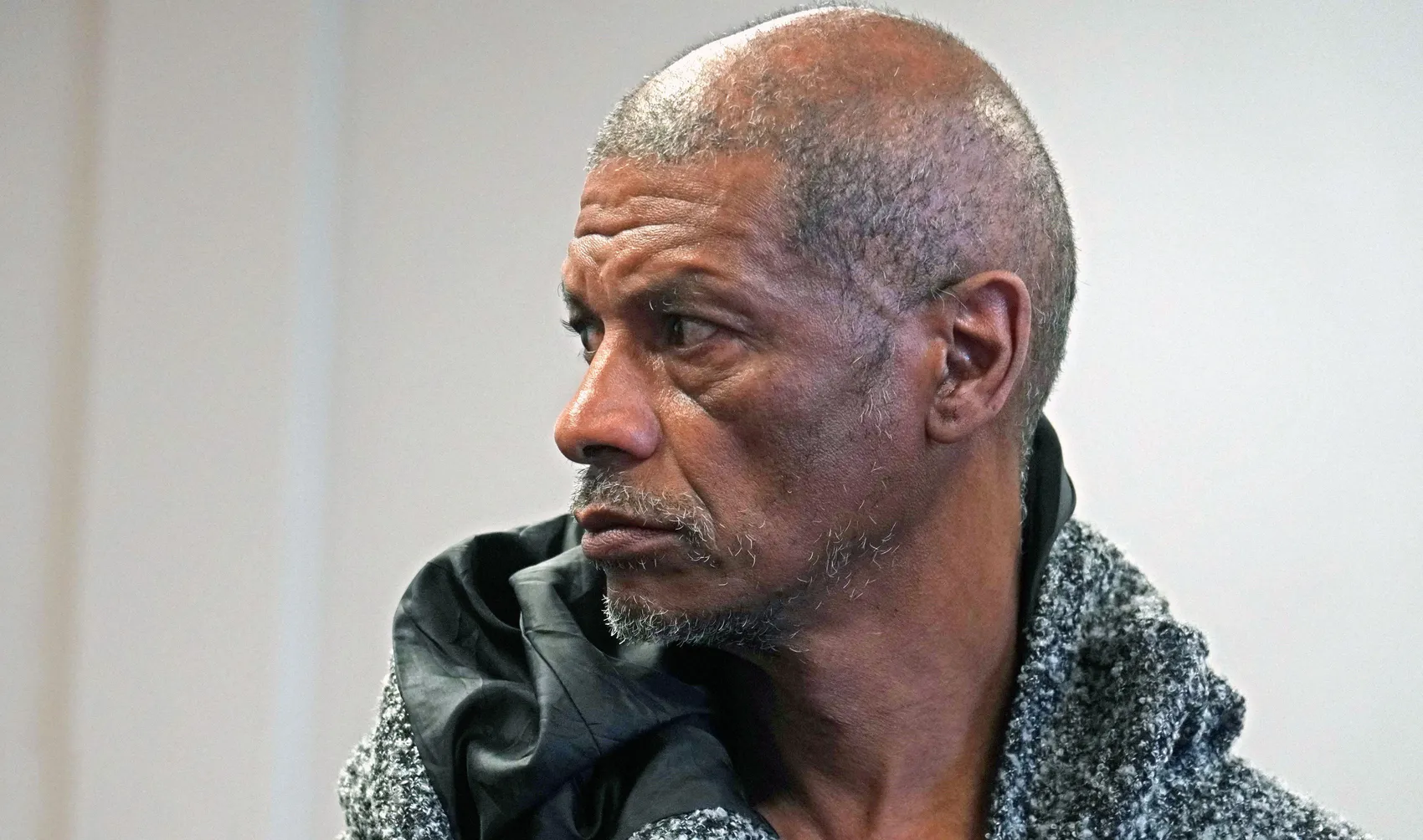
The wheels of justice in South Africa are often described as grinding slowly, but for the family of a nine-year-old girl in Hanover Park, they appear to have ground to a complete halt. This week, the Wynberg Regional Court heard that Igshaan Williams, a 51-year-old man accused of a harrowing sexual assault on a child, is to be sent for mental observation at Valkenberg Hospital. While the legal requirement for psychiatric evaluation is a standard procedural step, its implementation in this specific case has pulled back the curtain on a recurring nightmare: a criminal justice system that seemingly prioritises the procedural rights of a repeat offender over the immediate protection of the vulnerable.
The details of the incident, which took place in May 2025, are as chilling as they are calculated. According to evidence presented in court, the young complainant was on her way to madrasa—a place of learning and spiritual guidance—when she was intercepted by Williams. The accused allegedly called out to her, requesting that she perform a simple, mundane task: buying a carton of milk. It was a request designed to exploit the natural helpfulness of a child. After she returned with the milk, Williams allegedly instructed her to place it in the kitchen. Once she stepped inside the threshold of his home, the door was allegedly locked behind her.
What followed was a sequence of events that highlights the predatory nature of the alleged crime. It is further alleged that Williams fed the child bread, after which she became noticeably drowsy. It was during this period of drug-induced or physical lethargy that the alleged rape is said to have occurred. The child was not found until hours later. After a desperate search by her family and the community, which involved the scrutiny of local CCTV footage, the nine-year-old was discovered in the accused’s yard, curled up and traumatised.
However, the most damning aspect of this case is not just the alleged crime itself, but the fact that it was entirely preventable. Igshaan Williams is not a first-time offender. In November 2024, just six months before the Hanover Park incident, Williams was released on parole. He had been serving a 20-year sentence for a strikingly similar crime committed in 2005. In that instance, he was convicted in 2008 for the rape and indecent assault of a 10-year-old girl. Despite a history of violent sexual predation against children, Williams was deemed fit to return to the community under supervision—a decision that has now had devastating consequences.
The referral to Valkenberg Hospital for mental observation has ignited a firestorm of criticism from child protection advocates. While the court aims to determine if Williams is fit to stand trial or if he was criminally responsible at the time of the offence, the practical reality of such a referral is often a lengthy stay in legal limbo. Valkenberg Hospital, the primary forensic psychiatric facility in the Western Cape, is notorious for its staggering backlog. Recent reports indicate that even high-profile suspects can find themselves 60th or 70th on a waiting list for a bed, with some awaiting evaluation for over a year.
Kaylynn Palm, the head of Action Society’s Action Centre in the Western Cape, has been vocal about the systemic failures highlighted by this case. "The latest development in the Wynberg Regional Court is yet another example of how the criminal justice system fails to protect children from repeat offenders," Palm stated. "The accused in the rape of a nine-year-old girl in Hanover Park in May 2025 was already on parole after being convicted in 2008 of raping and indecently assaulting another ten-year-old child. This man has already proven that he is a danger to children. The fact that he was able to re-offend while on parole raises serious questions about how violent sexual offenders are being monitored and managed."
The sentiment is echoed by many who see the psychiatric referral as a tactical move by the defence. Action Society warned that the decision could result in significant delays, noting that "from our experience with previous placements at Valkenburg, waiting lists for observation can delay cases by up to a year. In practice, this often becomes another way for the defence to play the delay game." The organisation further argued that "no psychiatric evaluation is going to dispute the basic fact that this accused is a repeat offender who has already been convicted of sexual crimes against children. The justice system must prioritise the safety of victims and ensure that repeat predators are not allowed to manipulate procedural delays."
The broader context of parole in South Africa paints a worrying picture of recidivism. In the 2024/2025 financial year alone, over 5,600 parolees committed new offences out of a supervised population of approximately 52,000. This represents a reoffending rate of nearly 11 per cent. More alarmingly, Department of Correctional Services data reveals that hundreds of these new offences involve murder and rape. Between 2022 and 2025, over 600 parolees were accused of rape while under state supervision. These figures suggest that the monitoring mechanisms intended to keep the public safe are frequently bypassed by those with a penchant for violence.
In the case of Igshaan Williams, the community’s trust in the justice system has been severely eroded. At a previous court appearance, the gallery was packed with residents of Hanover Park, many of whom expressed their outrage at the fact that a convicted child rapist was living in their midst. The discovery that Williams had been granted parole despite the severity of his 2005 conviction has led to calls for a total overhaul of the parole system for violent sexual offenders.
The legal proceedings now face a significant hurdle. Williams faces a litany of charges, including human trafficking, rape, sexual assault, and abduction. Each of these charges carries the potential for a life sentence, particularly given his status as a repeat offender. However, until the psychiatric evaluation at Valkenberg is complete, the trial cannot proceed. The case has been postponed to 9 April 2026, but there is no guarantee that a bed will be available by that date.
For the young victim and her family, each postponement is a fresh wound. The trauma of the initial incident is compounded by the uncertainty of the legal process. In a country where child safety is frequently touted as a national priority, the reality on the ground often tells a different story—one of administrative backlogs, inadequate parole monitoring, and a procedural framework that can be easily exploited by those it is meant to punish.
As the case of Igshaan Williams moves forward, or rather, waits to move forward, it serves as a grim reminder of the stakes involved. Every day that a dangerous offender remains in the system without a final verdict is a day that the justice system fails to provide closure to those it has already let down. The question remains: how many more children must suffer before the cycle of parole and re-offence is finally broken?
The Wynberg Regional Court will reconvene in April, but the eyes of Hanover Park—and indeed the entire country—will be watching closely to see if justice will finally be served, or if it will once again be deferred by a system in crisis.

Follow Us on Twitter